
 By
·
2 minute read
By
·
2 minute read
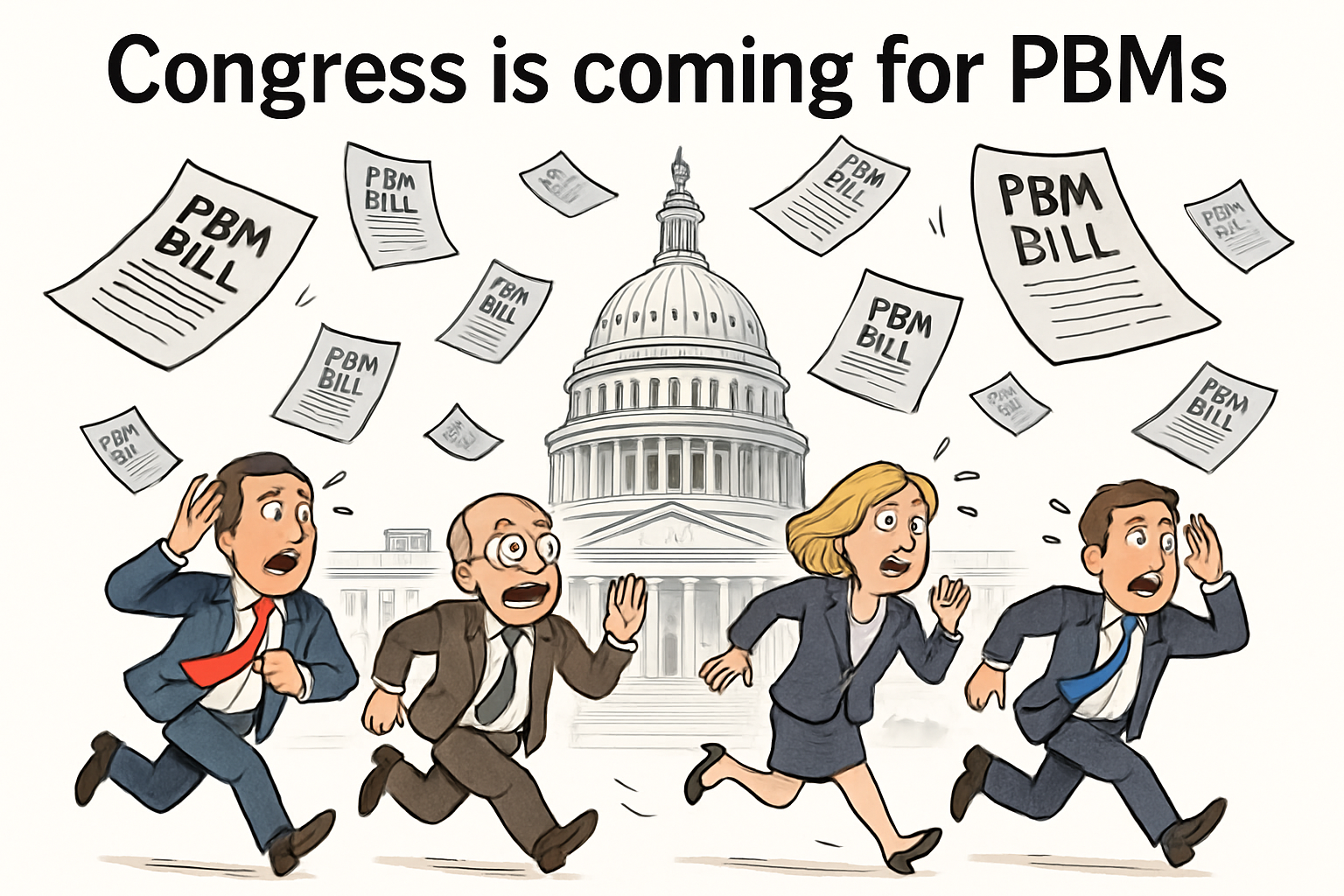
Federal lawmakers have finally noticed what self-insured employers have known for years: Pharmacy Benefit Managers extract billions from the healthcare system while keeping plan sponsors in the dark.
The PBM Reform Act of 2025 (H.R. 4317) arrived in Congress in July 2025 with bipartisan support. The bill would ban spread pricing in Medicaid, require PBM compensation to be structured as flat fees rather than percentages of drug costs, and mandate detailed spending disclosures for employer health plans.
The American Medical Association has endorsed it. The Cystic Fibrosis Foundation backs it. This sounds like good news. And it is. But note that as of January 2026, no single bill has passed both chambers of Congress.
Why Waiting Is the Wrong Strategy
Legislative timelines are unpredictable. Bills get amended, watered down, or stalled entirely. Provisions that looked promising in July can disappear by December. Even when legislation passes, implementation can take years.
Meanwhile, your health plan loses money every month it operates under opaque PBM arrangements. Three carrier-owned PBMs control nearly 80% of all prescription drug claims in the United States. They profit from spread pricing, rebate retention, and contract terms that prevent you from seeing actual costs.
If you are waiting for Congress to fix this, you could be waiting a long time. And if you currently operate under one of these opaque PBM contracts, you will continue to lose money while you wait.
What You Can Do Today
Fiduciary PBMs already offer the transparency and aligned incentives that Congress is now attempting to mandate. These alternative PBM models operate on pass-through pricing with no spread between what they pay pharmacies and what they charge your plan. They return 100% of manufacturer rebates to plan sponsors. They provide full audit rights with no restrictions or redactions.
You do not need legislation to access these savings. You just need a better contract.
The Fiduciary Case for Acting Now
ERISA requires self-insured employers to act solely in the interest of plan participants. The CAA strengthened this requirement. You must evaluate all your service providers, understand their compensation, and document that you are getting reasonable value.
Working with a PBM that hides its margins makes that evaluation impossible. Waiting for legislation while your plan loses money to hidden fees is not a defensible fiduciary position.
Elizabeth Mitchell, CEO of the Purchaser Business Group on Health, has stated it plainly: employers face increasing accountability as purchasers, with decreasing responsiveness from the industry. The current system will not reform itself.
Steps to Take This Quarter
- Audit your current PBM contract. Look for spread pricing, rebate retention clauses, and audit restrictions. If the contract limits your ability to see actual costs, that tells you something.
- Request pricing transparency. Ask your PBM for a breakdown of what they paid pharmacies versus what they charged your plan. If they refuse or delay, you have your answer.
- Run the numbers. Use analytics to identify formulary inefficiencies such as brand names dispensed when generic equivalents are available, therapeutic alternatives that could reduce drug costs, specialty drugs billed at inflated rates, etc. Then plan to redo your formulary design at the next opportunity.
- Evaluate fiduciary PBM alternatives. Several independent PBMs now offer fully transparent, pass-through models. Compare their terms to your current PBM arrangement and be ready to walk if needed.
- Document your process. ERISA requires a prudent process, not just a good outcome. Keep records of your evaluation, the alternatives you considered, and the rationale for your decision. With fiduciary-related lawsuits now being filed all over the place, you may need those records in court one day.
The Bottom Line
Legislative momentum is building. Bipartisan support for PBM reform is real. But passage is not guaranteed, and survival of all provisions in any final bill is uncertain.
Employers who transition to fiduciary PBM partnerships position themselves ahead of regulatory requirements while capturing savings today. The tools exist. The alternatives are available. The savings are real.
Waiting for Washington is a choice. But it shouldn’t be your only choice.
Jude Odu is the founder of Health Cost IQ and author of the upcoming new book Model Optimal Care: End U.S. Healthcare Waste, One Health Plan at a Time. This post is adapted from the book.